Global changes such as the transformation of political cultures, social
inequalities, the world of media, art and culture, the world of work,
digitalisation, worldwide migration movements and many other factors act as
driving forces for gender relations, which are also changing, quite
dramatically in parts. The complex discourses and controversies associated with
the category of gender pose a particular challenge to science, business,
administration, culture, politics and the church; this explains the growing
need for scientific reflection and the transfer of gender knowledge.
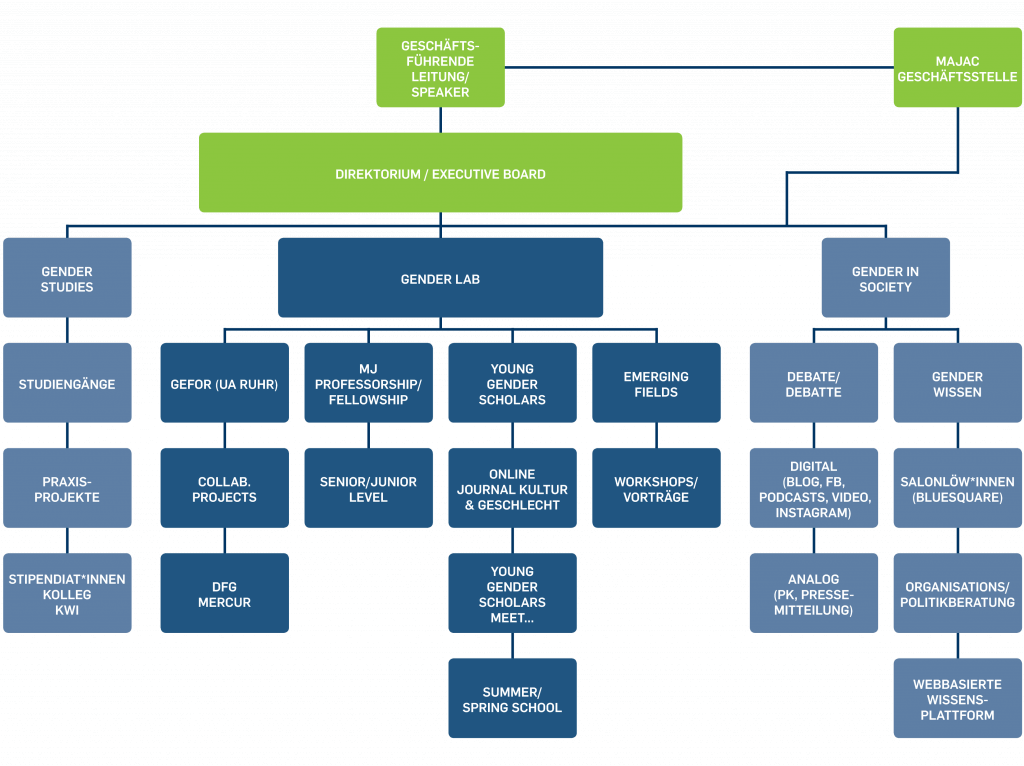
In order to meet these challenges, the researchers based at the Marie Jahoda Center for International Gender Studies work together in an intersectional approach. In order to understand inequalities in all their complexity, interactions with other categories such as class, disability, age, religion, sexual orientation or ethnicity are investigated and taught in two interdisciplinary courses of study on Gender Studies. After all, establishing regional, national and international knowledge networks within the framework of the Gender Lab plays a crucial role. Intensive discourse with society and developing programmes to reduce bias effects fall within the scope of Gender in Society.
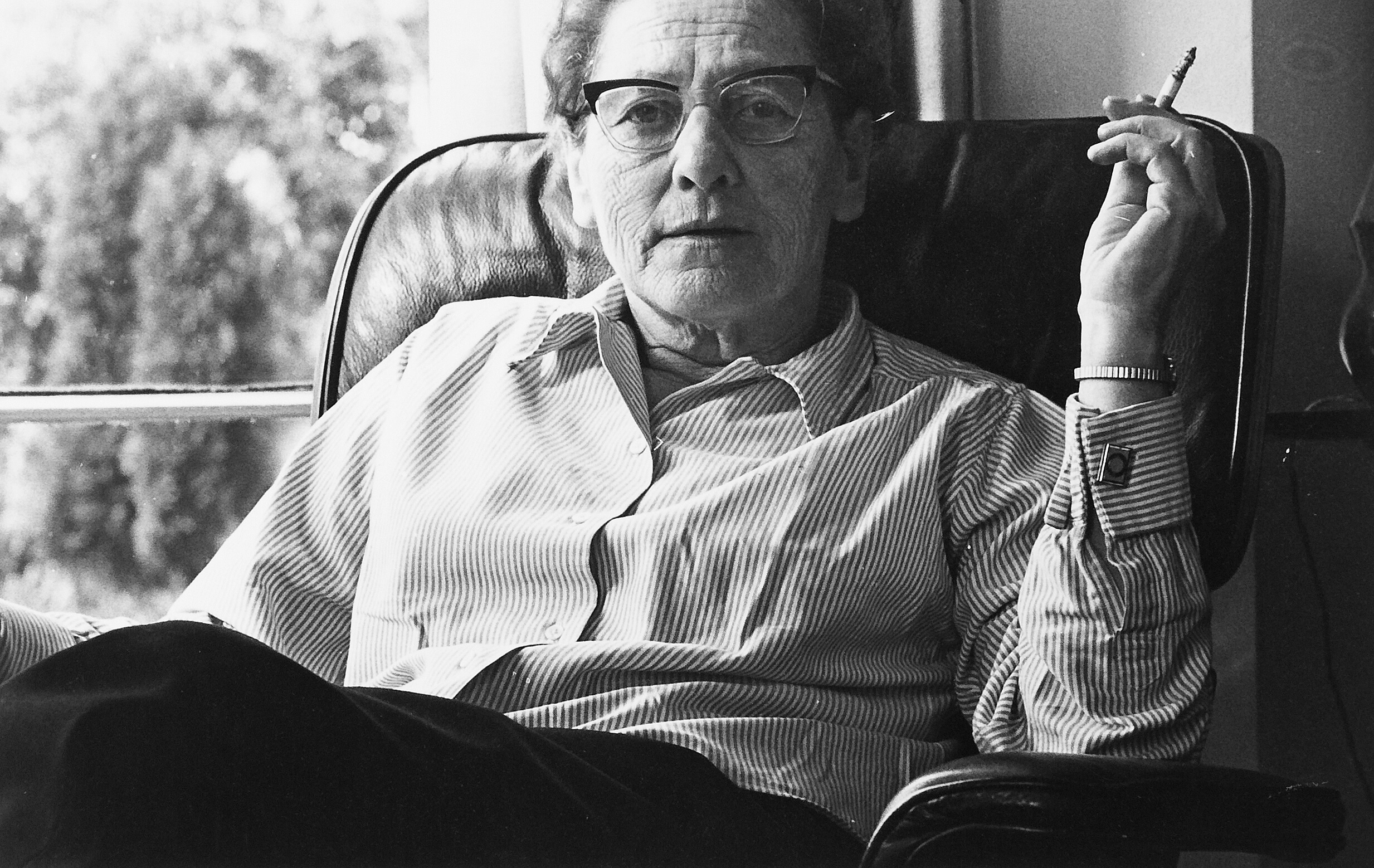
Marie Jahoda (1907-2001) was an Austrian social scientist and social
psychologist. She grew up in Vienna and began studying psychology there after
graduating from high school in 1926. Due
to her family’s precarious financial situation, Marie Jahoda worked alongside
her studies, including at the Career Guidance Office for the City of Vienna, at
the Social and Economic Museum housed there and as a librarian in the Karl-Marx-Hof
municipal tenement complex. She completed her doctorate in 1932 and just one
year later, she published the groundbreaking study “Die Arbeitslosen von
Marienthal” (The unemployed of Marienthal), which she had worked on with her
first husband Paul Lazarsfeld.
She then entered the teaching profession but was dismissed for being an
active member of the Social Democrats and an activist against the Nazi regime.
She was arrested in 1936 and emigrated to Great Britain the following year. The
academic fresh start was — as for many emigrants — full of hurdles and was
initially characterised by restricted research projects. She received a
scholarship from the University of Cambridge from 1939 to 1941. Marie Jahoda
ended up working on a freelance basis until the end of the war, with no direct
connection to a university. In 1945 she went to the USA where she first worked
as an assistant to Max Horkheimer.
When she moved to New York University in 1949, she finally succeeded in
taking up a professorship in social psychology. Here she worked on a variety of
empirical studies on heterogeneous issues such as prejudice, group conflicts,
mental health, education and looked at the consequences of McCarthyism. In 1958
she left the USA and, in her second marriage, married the English Labour MP
Austen Albu. In 1965 she became a founding professor of social psychology at
the new University of Sussex and as such was at the peak of her academic
career.
Marie Jahoda’s scientific work represents active interdisciplinarity — especially
with regard to method selection — and internationality. Her scientific research is consistently
linked with social issues and this, along with her strong public involvement
with political organisations, mean that Marie Jahoda is still today a role
model for intensive dialogue between science and society.
In 1994, the Visiting Professorship for International Gender Studies was
established at the Ruhr University Bochum, and named after Marie Jahoda.
Literature:
Steffani
Engler/Brigitte Hasenjürgen (publishers): Marie Jahoda. Ich habe die Welt nicht
verändert. Lebenserinnerungen einer Pionierin der Sozialforschung ((I didn’t
change the world. Memoirs of a pioneer of social research), Weinheim und
Basel 2002.
Johann
Bacher/Waltraud Kannonier-Finster/Meinrad Ziegler (publishers): Marie Jahoda.
Lebensgeschichtliche Protokolle der arbeitenden Klassen 1850-1930 (Life history
records of the working classes 1850-1930). Dissertation 1932. With
a portrait of the author by Christian Fleck, Innsbruck/Vienna/Bolzano 2017.